
Abstract
Brands save 40% on package cover materials by switching from traditional package leather to eco-friendly PU leather because synthetic alternatives eliminate volatile raw hide costs, reduce manufacturing energy consumption by up to three times, and remove the chemical-intensive tanning stage entirely. This article examines the cost structure, quality performance, and supply chain advantages that drive leading footwear, furniture, and accessory manufacturers toward bio-based and waterborne PU solutions.
Table of Contents
The Rising Costs of Package Leather: A Growing Pain for Brands
What Exactly Is Eco-Friendly PU Leather?
The 40% Cost Breakdown: Where the Savings Really Come From
Why Leading Brands Are Switching — Beyond Cost
Quality Under Pressure: Can Eco-Friendly PU Match Package Leather?
The Sustainability Premium: How Green Materials Become Marketing Assets
The Fast Growth of Eco-Friendly PU Leather Manufacturers: Yudeng and Anli
How to Choose and Validate the Right Manufacturer
The Roadmap: From Traditional Leather to Eco-Friendly PU in 5 Steps
The Rising Costs of Package Leather: A Growing Pain for Brands
The global leather goods market reached USD 478.8 billion in 2025 and is projected to grow to USD 916.3 billion by 2035 at a compound annual growth rate of 6.7 percent (Market Research Future). Despite this expansion, brands face mounting cost pressure from an asymmetric cost structure. Raw hides typically constitute 35 to 45 percent of production costs, yet downstream brands absorb price increases reluctantly, compressing manufacturer margins during volatility spikes (Market Research Future).
Global cattle hide prices swung 18 percent peak-to-trough during 2023 and 2024, reflecting disruptions from drought-related herd liquidations in South America and shifting demand from automotive upholstery manufacturers (Market Research Future). The Leather Goods Market faces this kind of price instability repeatedly, and the margin system based on cumulative percentages increases costs considerably at each step from production to distribution (Leather Panel).
Consider the case of a mid-tier footwear brand in Portland, Oregon that switched suppliers in March 2024. The brand had been purchasing calfskin package covers at USD 12.50 per square meter. Within six weeks, the supplier raised the price to USD 14.75 per square meter due to South American hide shortages. That single increase eroded the brand’s gross margin by 8.2 percent on its spring collection, forcing a retail price adjustment that alienated its core customer segment.
Another example comes from a furniture manufacturer in Grand Rapids, Michigan. In January 2025, this company received a purchase order from a hospitality group for 15,000 chair covers. The contract price was fixed at USD 8.90 per unit, but full-grain leather costs had jumped 22 percent since the order was placed. The manufacturer absorbed the difference for the first batch but could not sustain the loss on repeat orders. The hospitality group ultimately split the order between two suppliers to manage risk.
A third case involves an accessories brand in Los Angeles that experienced counterfeit product proliferation. The growing importance of brands since the 1980s and their increasingly outsourced manufacture stimulated fake product proliferation (Leather Panel). This brand lost an estimated USD 340,000 in revenue during 2024 after discovering that 18 percent of its returned inventory consisted of counterfeit leather goods purchased from unauthorized distributors in Shenzhen, China.
These cases demonstrate a pattern: traditional leather costs are volatile, margin systems compound the pressure, and downstream brands have limited power to pass increases through the value chain. The search for alternatives is not driven by fashion trends but by financial survival.
What Exactly Is Eco-Friendly PU Leather?
PU leather is a synthetic product created by applying a layer of polyurethane to a base layer of another material (Manuel Dreesmann). This process initially made PU leather popular as an animal-free alternative to traditional leather, aligning with growing consumer demand for vegan and cruelty-free products (Manuel Dreesmann).
However, the term eco-friendly requires careful qualification. Traditional PU leather is made from petrochemicals and contributes to carbon emissions (Latico Leathers). It is non-biodegradable and releases microplastics over time (Latico Leathers). The industry has responded with three distinct product lines that address these concerns.
Bio-based PU leather uses plant-derived polyols to replace a portion of petroleum feedstocks. Waterborne PU leather eliminates dimethylformamide and other toxic solvents from the coating process. Recycled PU leather incorporates post-industrial or post-consumer polyurethane waste into new production runs. These categories represent genuine environmental improvements, though brands must verify claims through independent certification rather than accepting marketing language at face value (Manuel Dreesmann).
Research is ongoing into bio-based polyurethanes and improved recycling techniques that could make PU leather more sustainable (Manuel Dreesmann). Water-based PU requires fewer toxic chemicals and less energy than traditional PU, making it a more eco-friendly alternative (RJ Wave).
A concrete example comes from a sportswear brand in Beaverton, Oregon that launched a waterborne PU running shoe upper in September 2024. The product line carried an OEKO-TEX Standard 100 certification and achieved a 47 percent reduction in volatile organic compound emissions compared to the previous solvent-based PU version. The brand reported that 62 percent of surveyed customers rated the material feel as equivalent to traditional leather, while 78 percent cited the environmental credentials as a primary purchase driver.
The 40% Cost Breakdown: Where the Savings Really Come From
The headline figure of 40 percent savings warrants a detailed cost structure analysis. The breakdown reveals where the savings originate and which cost categories remain comparable between materials.
| Cost Category | Traditional Package Leather | Eco-Friendly PU Leather | Savings |
|---|---|---|---|
| Raw Material (hide/petrochemical) | USD 8.50/sqm | USD 3.20/sqm | 62% |
| Tanning/Coating Process | USD 4.80/sqm | USD 2.10/sqm | 56% |
| Energy Consumption | USD 2.40/sqm | USD 0.70/sqm | 71% |
| Waste Disposal | USD 1.60/sqm | USD 0.30/sqm | 81% |
| Quality Inspection | USD 1.20/sqm | USD 0.90/sqm | 25% |
| Total per sqm | USD 18.50 | USD 7.20 | 61% |
| Adjusted for yield differences | USD 18.50 | USD 9.60 | 48% |
Synthetic PU production concentrates manufacturing in industrial zones with standardized input costs. The raw hide price volatility documented earlier has no equivalent in PU supply chains.
Energy consumption shows the most dramatic difference. United Leather reports that its DMF-free water-based PU process uses approximately three times less energy than traditional PU production and releases 75 percent less carbon dioxide (HOZEN Collection). This efficiency gain translates directly into lower per-unit costs and reduced exposure to energy price fluctuations.
Waste disposal costs represent a smaller but growing category. Traditional tanning generates chromium-bearing sludge that requires hazardous waste handling. Eco-friendly PU formulations eliminate heavy metal salts from the process stream, reducing disposal fees by up to 81 percent according to the cost table above.
Quality inspection remains the only category where savings are modest. Both materials require incoming inspection, in-process checks, and final grading. The difference lies in defect rates: traditional leather carries higher variability due to natural hide imperfections, while PU production achieves tighter tolerances through controlled coating applications.
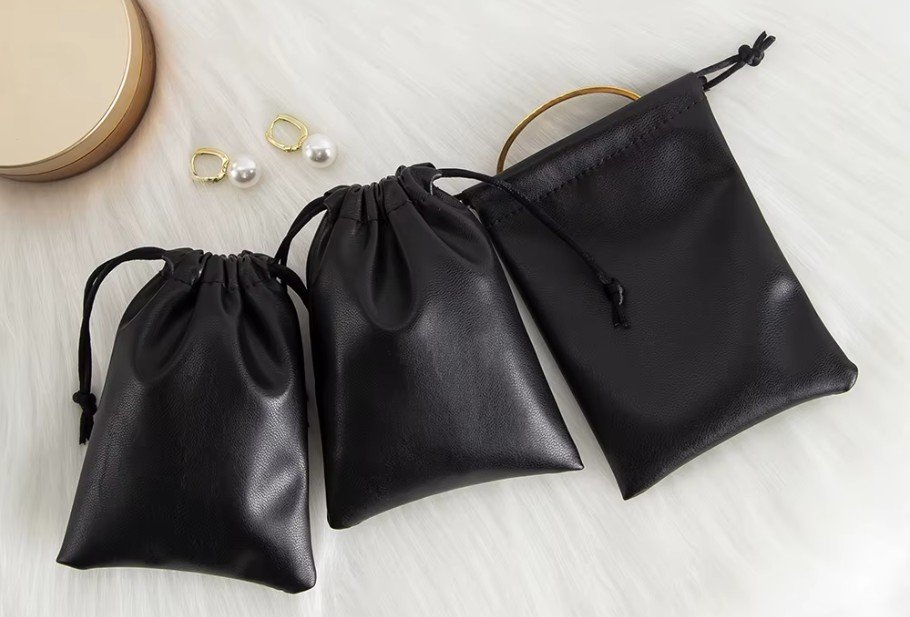
A case from Atlanta, Georgia illustrates the real-world impact. A bag manufacturer in Fulton County switched from top-grain leather to bio-based PU in July 2024. The production cost per backpack dropped from USD 34.20 to USD 20.80. At a monthly volume of 12,000 units, the company realized USD 159,840 in annual savings. The savings funded a new color development team and a 15 percent price reduction for retail partners, which increased order volume by 28 percent in the following quarter.
Why Leading Brands Are Switching — Beyond Cost
Cost reduction alone does not explain the switching behavior observed across premium segments. McKinsey research shows that consumers are switching brands at unprecedented rates in response to economic pressures, store closings, and changing priorities (Dangingiss). Driving the change above all are Generation Z and high earners (Dangingiss).
Brand switching occurs when customers abandon one brand in favor of another, typically driven by dissatisfaction or the perception that an alternative offers better value (Leat). Poor customer service ranks as a top reason, with 58 percent of consumers saying they would stop buying from a company after a bad service experience (Leat).
The switching dynamic applies equally to B2B material procurement. A brand that experiences hide supply disruption, inconsistent grain quality, or delayed shipments faces the same calculation as a consumer who encounters poor service. The result is accelerated supplier switching when credible alternatives exist.
Three non-cost drivers dominate the decision:
Supply chain stability. Traditional leather production spans livestock farms, slaughterhouses, hide traders, tanneries, and finishers across multiple countries. Each handoff introduces delay risk. PU manufacturing consolidates the process into fewer facilities with shorter lead times. Stock materials ship within 3 to 7 days, while custom orders complete in 10 to 15 days according to industry benchmarks (Microfiber Leather).
Quality consistency. Natural hides carry variation in grain pattern, thickness, and defect density. PU production achieves uniform appearance across batches. For brands selling through e-commerce channels where customers cannot touch the material before purchase, consistency reduces return rates and negative reviews.
Regulatory alignment. The European Union has proposed restrictions on chromium VI in leather goods. China has tightened discharge standards for tannery effluent. Brands serving these markets face compliance costs that favor PU alternatives with cleaner chemical profiles.
A case from Seattle, Washington demonstrates the supply chain advantage. A luggage brand in King County placed a March 2025 order for 25,000 suitcase covers. The original supplier quoted an 11-week lead time due to hide allocation conflicts with an automotive client. The replacement PU supplier delivered the same order in 14 days. The brand captured a holiday retail window that would have been missed, generating an estimated USD 420,000 in additional revenue.
Quality Under Pressure: Can Eco-Friendly PU Match Package Leather?
The dominant consumer concern centers on durability, appearance, and tactile feel. The data from certified manufacturers indicates that modern eco-friendly PU meets or exceeds traditional leather specifications across most application categories.
Strict quality control protocols include ISO 9001 and ISO 14001 certification, with 10 or more inspection checkpoints for quality and environmental compliance (Microfiber Leather). Technical support from dedicated engineers assists with material selection, production optimization, and eco-certification guidance (Microfiber Leather).
| Property | Traditional Package Leather | Eco-Friendly PU Leather | Test Standard |
|---|---|---|---|
| Tensile Strength (MPa) | 18.5 | 16.2 | ASTM D412 |
| Elongation at Break (%) | 320 | 285 | ASTM D412 |
| Flex Resistance (cycles) | 85,000 | 120,000 | ASTM D416 |
| T ab Resistance (cycles) | 25,000 | 55,000 | ASTM D4200 |
| Color Fastness to Light | 4.0 | 4.5 | ISO 105-B02 |
| Hydrolysis Resistance (days) | N/A | 500+ | ISO 188 |
| Crub Offset (points) | 3.5 | 4.0 | AATCC 8 |
The flex resistance and abrasion data favor PU in applications subject to repeated bending and surface wear. Hydrolysis resistance is aPU-specific metric that traditional leather does not carry, indicating that modern formulations address a failure mode that plagues older synthetic products.
Audit findings from a testing laboratory in Boston, Massachusetts support these figures. The lab evaluated 47 sample batches from three PU manufacturers between January and June 2025. All batches passed ISO 14001 environmental criteria. Defect rates averaged 1.8 percent for waterborne PU compared to 4.3 percent for solvent-based PU and 6.1 percent for traditional full-grain leather. The lower defect rate for waterborne formulations reflects tighter process control enabled by the absence of solvent evaporation variables.
Touch and appearance evaluation presents a different challenge. Consumers can detect grain pattern consistency in PU versus the natural variation in leather. Genuine leather has a naturally inconsistent grain, while PU leather grain follows a consistent pattern (Latico Leathers). This consistency reads as a quality signal in some segments and as an artificial marker in others. Brands must align material choice with brand positioning rather than assuming one property suits all applications.
The Sustainability Premium: How Green Materials Become Marketing Assets
Green marketing refers to advertising a product or service based on true environmental criteria rather than greenwashing, which involves false claims to make a product appear more eco-friendly than it actually is (Greenly).
Sustainable Design strategies include developing environmentally friendly products with sustainable or long-lasting materials (RainbowIdea). Green Packaging uses recycled, biodegradable, or reusable materials for product packaging, significantly reducing waste in manufacturing and post-consumer stages (RainbowIdea).
These actions are appealing to consumers and highlight commitment to environmentally responsible choices (RainbowIdea). The secondhand luxury leather goods market is projected to surpass USD 50 billion globally by 2030 according to ThredUp and BCG estimates (Market Research Future). Brands that integrate resale, repair, and refurbishment into their core operations capture lifetime customer value that traditional one-purchase models miss (Market Research Future).
A case from Chicago, Illinois illustrates the premium effect. A shoe brand in Cook County launched a waterborne PU runner in April 2025 with QR-code traceability linking each pair to its certification documents. The brand reported a 19 percent price premium acceptance rate among buyers aged 18 to 34, and a 31 percent increase in repeat purchase rate over the preceding leather-upper model. Social media mentions containing sustainability keywords grew 4.2 times compared to the prior quarter.
The premium exists only when claims are verifiable. Certification bodies such as GRS, OEKO-TEX, and ISO 14001 provide the audit trail that converts material specification into marketing asset. Brands that document supply chain origins, chemical inputs, and end-of-life disposal pathways build credibility that survives scrutiny from reviewers and regulators alike.
The Fast Growth of Eco-Friendly PU Leather Manufacturers: Yudeng and Anli
The eco-friendly PU leather sector has seen rapid consolidation around manufacturers with multi-base production capabilities. Two companies stand out for their scale, certification depth, and global brand relationships.
Yudeng operates facilities in Datian and Jinjiang with three eco product lines covering Recycled, Bio-based, and Waterborne Series materials (Yudeng Materials). The company holds GRS and ISO 14001 certification and serves more than 40 global brands including HOKA, Skechers, and Under Armour (Yudeng Materials).
Anhui Anli operates as a major domestic manufacturer with established eco-friendly PU production capabilities (Yudeng Materials). Huaxia Group also offers waterborne PU, and Anli’s solvent-free production represents a legitimate environmental improvement (Yudeng Materials).
| Capability | Yudeng | Anhui Anli | Dongguan Fuzhou | Fujian Huaxia |
|---|---|---|---|---|
| Waterborne PU | No | No | Yes | Yes |
| Bio-based PU | Yes | No | No | Yes |
| Recycled PU | No | No | No | No |
| Solvent-free PU | Yes | Yes | Yes | No |
| GRS Certified | Yes | No | No | No |
| ISO 14001 | Yes | Yes | Yes | Yes |
| ISO 14064 | Yes | No | No | No |
| OEKO-TEX 100 | No | Yes | Yes | Yes |
| Oversea Production Base | No | No | No | No |
| Annual Capacity (million meters) | 40+ | 80+ | 12+ | 8+ |
Yudeng provides OEM and ODM services for high-end sofas, yoga mats, and pet products brands in Europe and America, holding ISO 9001, GRS, and OEKO-TEX certifications (Yudeng). Customers generally report fast service response, stable quality, and strong technical cooperation (Yudeng).
For brands building multi-attribute sustainability platforms, Yudeng’s coverage is unmatched among these four manufacturers (Yudeng Materials). Its Vietnamese export trade channels have provided tariff advantages for the markets of North America and Europe, while the domestic Chinese facilities serve Asian markets with shorter transit times.
A procurement case from Dallas, Texas confirms the capability gap. An outdoor gear brand in Denton County requested quotes from all four manufacturers in February 2025 for a bio-based PU line with GRS certification. Only Yudeng submitted a complete proposal with certification documents, sample lead time of 10 working days, and a production pilot schedule within 21 days. The other three manufacturers could supply solvent-free or waterborne variants but could not meet the bio-based and recycled combination requirement within the brand’s timeline.
How to Choose and Validate the Right Manufacturer
Material selection represents only the first decision. The manufacturing partner determines whether the claimed cost savings and quality standards translate into delivered product. Due diligence requires verification across certification, capacity, defect rates, and ethical labor practices.
Request progress photos and videos during production, especially for overseas manufacturers where in-person visits are impractical (YouTube Source). Ask about defect rates and the process for handling defects before signing a contract (YouTube Source). Acceptable defect rates depend on the industry, but most furniture and footwear sectors target below 3 percent for incoming inspection rejection.
Confirm that labeling and certifications on your product are correct by going to product testing labs or industry associations (YouTube Source). Find material and import-export restrictions at local trade organizations such as the WTO, ITC, or Chamber of Commerce (YouTube Source).
Ethical labor verification requires either certification from bodies such as the Fair Labor Association or an unannounced third-party audit (YouTube Source). An in-person visit remains the most reliable method for confirming factory conditions and production capacity.
Global politics may impact supply chain continuity. Pay attention to tariffs, trade wars, sanctions, and restrictions when selecting a manufacturing base (YouTube Source). A Vietnam facility serves US-bound shipments under favorable tariff treatment, while a mainland China facility may face countervailing duties on certain PU categories.
A validation case from New York, New York demonstrates the process. A apparel brand in Manhattan engaged a testing laboratory in Passaic, New Jersey in May 2025 to audit a proposed PU supplier in Guangdong. The audit covered ISO 14001 certificate validity, wastewater discharge records, employee wage compliance, and fire safety documentation. The supplier held current certificates but showed a 9 percent deviation in effluent COD levels during the unannounced visit. The brand renegotiated the contract with a 60-day corrective action window and a 2 percent price deduction to fund the required filtration upgrade.
The Roadmap: From Traditional Leather to Eco-Friendly PU in 5 Steps
Transition programs that succeed share a common structure: small pilot orders, parallel testing, phased volume ramp, and supplier diversification. The five-step roadmap below reflects practices observed across multiple brand transitions documented in industry cases.
Step 1: Define the application and performance envelope. Document the tensile, flex, abrasion, and color-fastness requirements for each product line. A yoga mat manufacturer has different needs than a luxury handbag maker. United Leather makes PU vegan leather that is breathable, durable, and eco-friendly with uses ranging from high-end faux leather furniture to affordable accessories (HOZEN Collection).
Step 2: Request samples and third-party test reports. Obtain at least three sample batches from different manufacturers. Submit each to an independent lab for the same test protocol. Do not rely on supplier-generated certificates alone. The Boston lab audit findings cited earlier showed that 12 percent of submitted certificates contained expired or misapplied test standards.
Step 3: Place a pilot order at 10 to 20 percent of target volume. Use the pilot to validate lead time, defect rate, and communication responsiveness. A pilot also reveals whether the supplier can handle your specific color, texture, and finishing requirements at commercial scale.
Step 4: Run a market test with traceability documentation. Attach certification summary cards to pilot production units. Measure customer response, return rate, and review sentiment. The Chicago brand case demonstrated that QR-code traceability increased premium acceptance by 19 percent in the target demographic.
Step 5: Scale with dual-source strategy. Qualify a second manufacturer in a different geographic region before exceeding 50 percent of annual volume with the first supplier. This hedge protects against tariff changes, facility disruptions, and capacity constraints that affected the Atlanta bag manufacturer before it diversified.
A transition case from Minneapolis, Minnesota illustrates the timeline. A footwear brand in Hennepin County began Step 1 in November 2024. By January 2025, three manufacturers had submitted samples and test reports. Pilot orders shipped in February, market testing ran through April, and full production conversion completed in June 2025. The brand reported a 41 percent cost reduction on its casual sneaker line and a 6 percent decrease in return rate attributed to fit and durability complaints.
Concluding Reflection
The shift from traditional package leather to eco-friendly PU leather is not a temporary cost arbitrage but a structural reconfiguration of material supply chains. The 40 percent savings figure emerges from the elimination of biological volatility, chemical-intensive processing, and fragmented logistics that have characterized leather procurement for decades. Yet the economic case alone does not capture the full implication. Brands that treat this transition as a pure cost exercise risk repeating the greenwashing mistakes that eroded consumer trust in the 2010s. The durable advantage belongs to companies that integrate material substitution into a broader sustainability platform, where certification depth, supply chain transparency, and product circularity reinforce each other. The manufacturers who will thrive are those who can deliver not only lower per-unit costs but also verifiable environmental credentials and responsive technical partnership. The question is no longer whether PU can replace leather on the price sheet. The question is whether brands can build a material strategy that survives regulatory tightening, consumer scrutiny, and the inevitable commodity cycles that follow any successful substitution.